 FairFare

Seoul's Best Summer Noodles Are Swimming in Soy Milk. Thick, Ice-Cold Soy Milk.
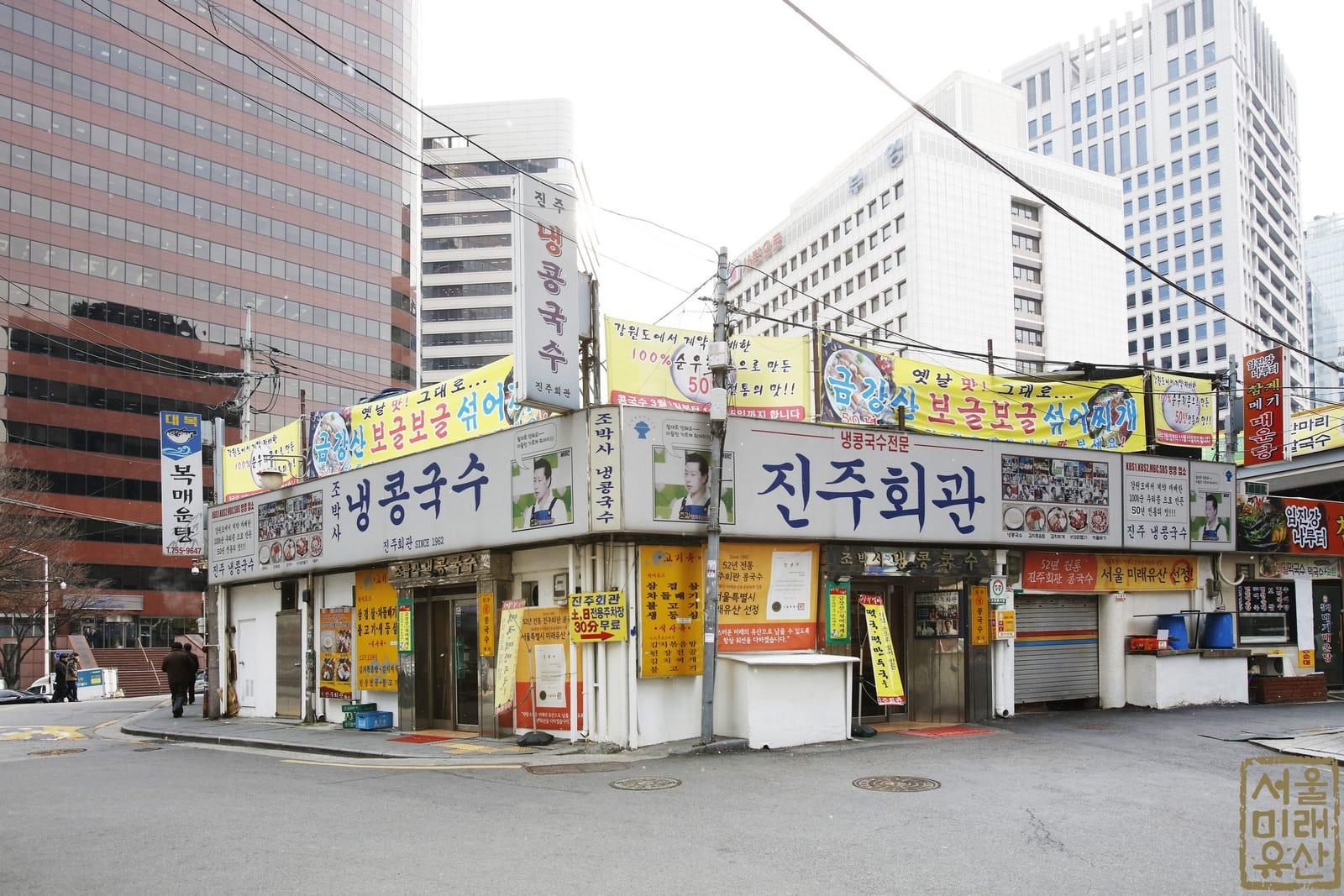
Jinju Hoegwan has served kong-guksu near City Hall since 1962. Office workers sprint here at noon.
By FairFare Seoul Desk · Updated 2026-11
At noon on a hot July day, look around Seoul City Hall. You'll see people in suits walking very fast, all in the same direction. Follow them.
They're heading to Jinju Hoegwan, a no-frills noodle house that's been in the same spot for more than 60 years. At lunch there's exactly one thing on offer, and almost everyone is here for it.
First, what is kong-guksu?
Kong means soybeans. Guksu means noodles. Kong-guksu is wheat noodles in a cold soup made by soaking soybeans, boiling them and grinding them into a thick, creamy liquid. Think fresh soy milk, but much richer. Almost a savory milkshake.
Koreans have eaten noodles in soybean soup since at least the late 1800s, when it shows up in old cookbooks. It's a summer dish: before air conditioning, a cold bowl full of bean protein was how people kept their energy up in the heat. Plenty of shops still only sell it while it's warm.
The great debate: salt or sugar?
Ask Koreans how to season kong-guksu and you might start an argument. Most add a pinch of salt to bring out the nutty beans. In the southwestern Jeolla region, many swear by sugar instead. Taste it plain first, then pick your side.
Why this one?
- The beans. Native hwangtae beans grown in Gangwon Province, the mountainous east. The soup is so thick it almost coats the noodles like a sauce.
- No ice. The soup is chilled without ice cubes, so it never gets watered down.
- The history. Same spot, same family since 1962. Seoul named it one of its Future Heritage sites in 2013, a title for places that hold the city's everyday history.
What to order
- Kong-guksu ₩16,000. This is why you're here. The bowl is big.
- The kimchi comes free. Sweet and spicy, a great match for the mild soup. Alternate bites.
Yes, ₩16,000 is a lot for noodles in Seoul. See how it compares in our Seoul food price guide. Outside the summer lunch rush, there's also kimchi stew and kimchi fried rice for groups.
House rules
- Pay first. You pay when you order. How payments work in Korea.
- Your whole group must be there. They won't seat you until everyone arrives.
- Come before 11:30. From noon to 1pm it's office-worker rush hour.
- Closed on Sundays. No reservations, either.
Visiting in winter?
Kong-guksu is only sold from March to November. If you're in Seoul in the cold months, save this page for your spring trip.
Read next
Prices are approximate. Please check at the restaurant before you pay.
Photo credits
Shop photos are the brand's own, credited to the source. Tell us and we'll take one down.
- Jinju Hoegwan's storefront on a side street behind City Hall: 서울미래유산 (서울특별시)
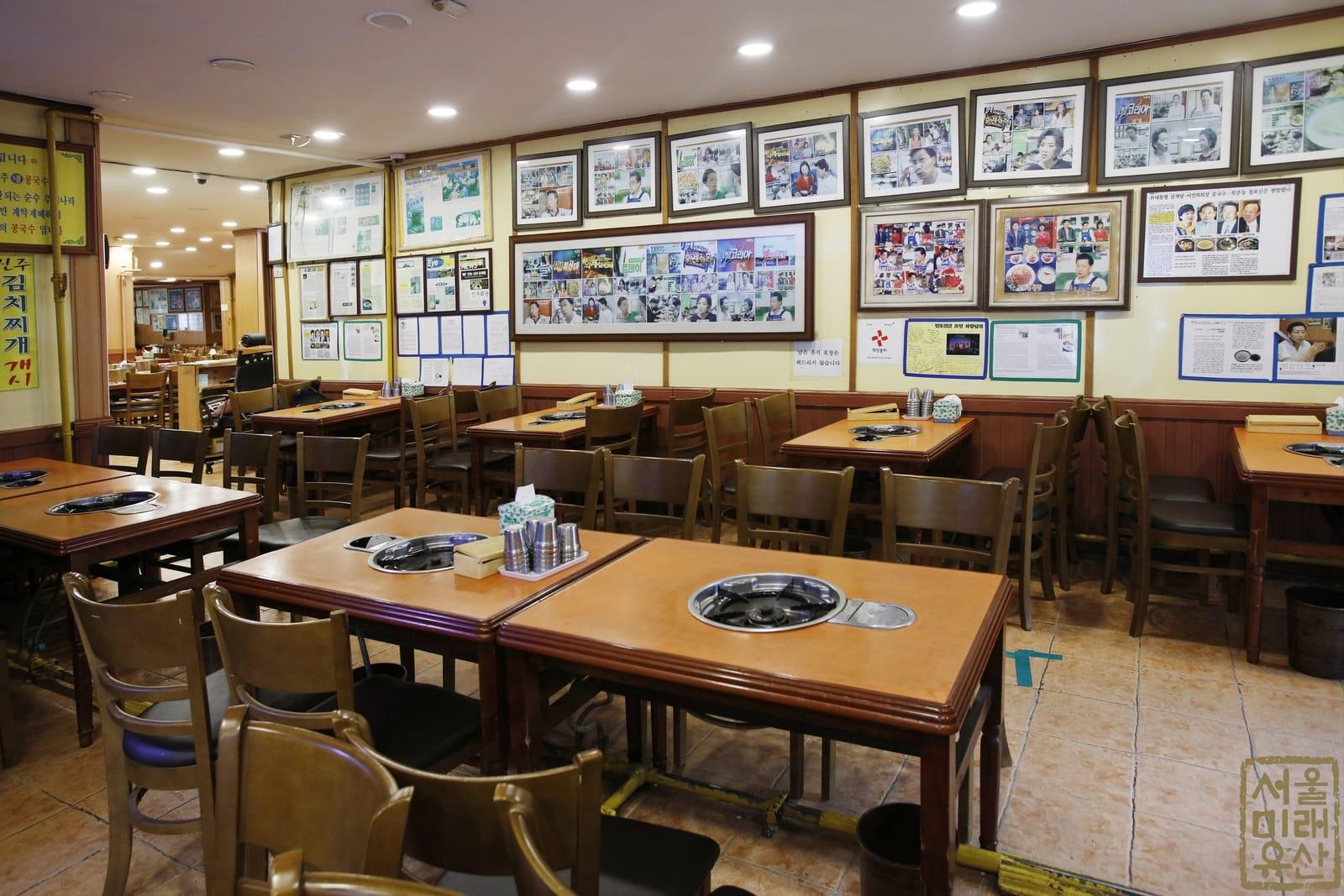
- Inside Jinju Hoegwan, walls covered in TV-appearance photos: 서울미래유산 (서울특별시)