 FairFare
Nearby Attractions
Real admission fees for popular attractions, with the nearest subway station for each.
Planning your visit
November through February is Bangkok's cool, dry season and the most comfortable time to be outdoors; March through May turns brutally hot, the rainy season from June through October brings heavy but usually short afternoon downpours, and mid-April's Songkran festival fills streets citywide with water fights that can make a walking sightseeing route slower going even though the temples themselves stay open. Reservations aren't the norm here the way they've become in China — most sights operate on a walk-up basis, though the Grand Palace and Wat Phra Kaew enforce a strict dress code covering shoulders and knees that's worth planning around rather than a booking window. The main royal and temple sights cluster together on and around Rattanakosin Island by the river, reachable on foot or by river ferry, while newer draws like Chatuchak Market sit further out and need the BTS or MRT. Bangkok's admission prices are low enough individually that a multi-attraction sightseeing pass is usually only worth it if you're packing in a lot of paid sights in a short trip.
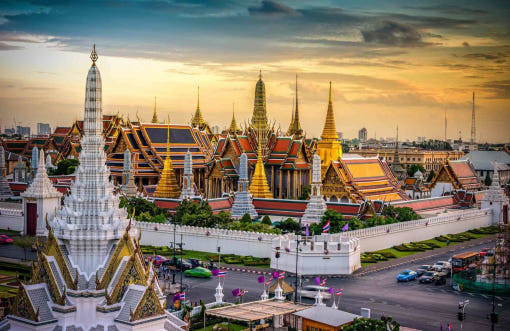
Grand Palace
Royal PalaceThe former royal residence and Thailand's most visited landmark, whose grounds also hold Wat Phra Kaew (the Temple of the Emerald Buddha).
🚇 MRT Blue Line · Sanam Chai฿500 for foreign visitors covers the Grand Palace, Wat Phra Kaew, the Queen Sirikit Museum of Textiles, and the Royal Decorations & Coins Pavilion on one ticket. A strict dress code applies (no shorts, sleeveless tops, or open-back shoes).
View on map ↗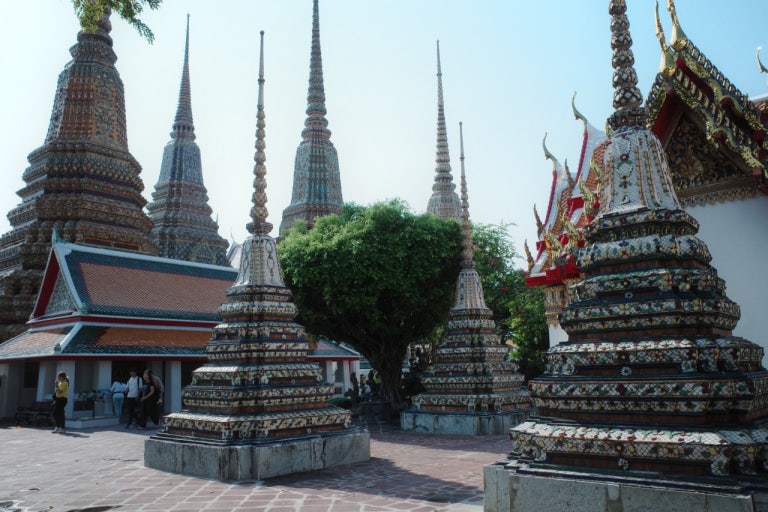
Wat Pho
Temple / ShrineHome to a 46m gold-plated Reclining Buddha and considered the birthplace of traditional Thai massage, with an on-site massage school still operating today.
🚇 MRT Blue Line · Sanam Chai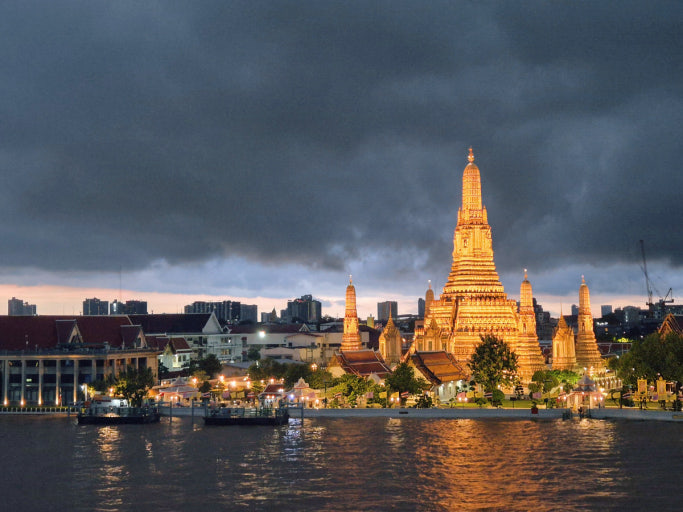
Wat Arun
Temple / ShrineThe 'Temple of Dawn,' a riverside temple famous for its towering central spire decorated with colorful porcelain, best reached by a short cross-river ferry from Tha Tien Pier near Wat Pho.
🚇 MRT Blue Line · Sanam Chai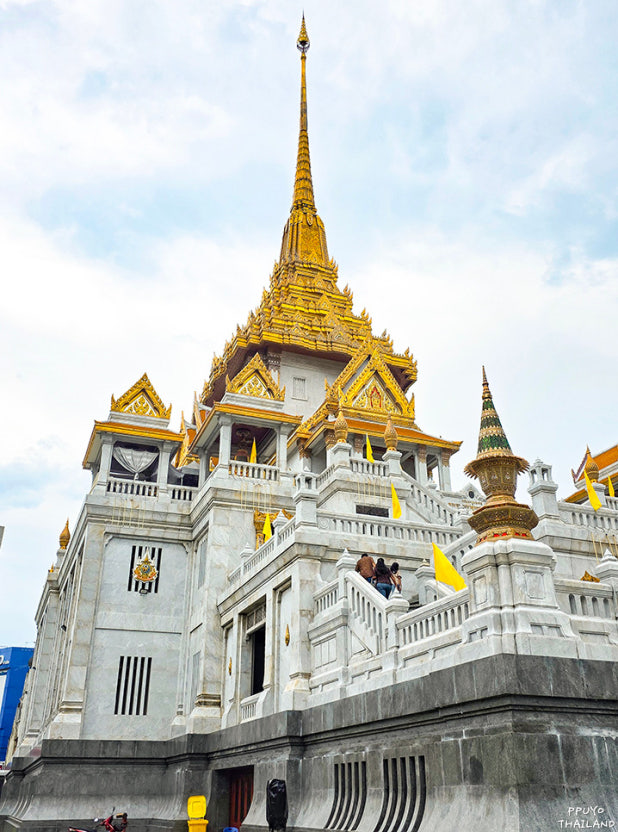
Wat Traimit (Golden Buddha)
Temple / ShrineHome to the world's largest solid-gold Buddha statue (5.5 tonnes), discovered by accident in the 1950s when its plaster casing cracked — located at the edge of Bangkok's Chinatown.
🚇 MRT Blue Line · Wat Mangkon฿40 covers viewing the Golden Buddha itself; an additional ฿100 covers the Phra Maha Mongkol Buddha Chinese Heritage Center museum in the same building.
View on map ↗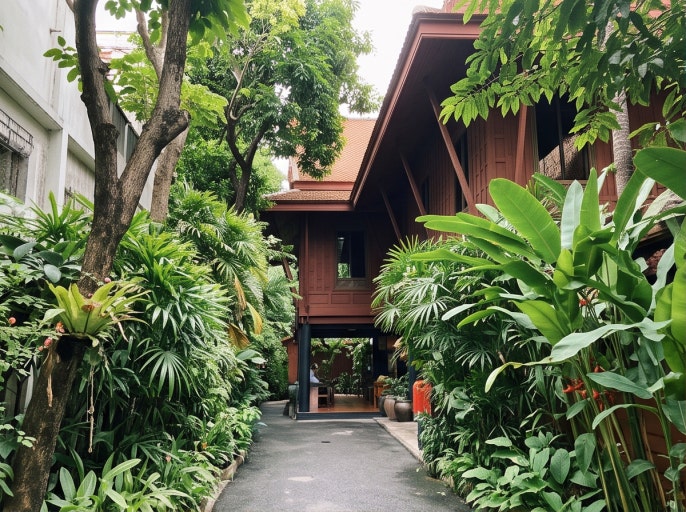
Jim Thompson House
MuseumThe teak-house compound of Jim Thompson, the American businessman credited with reviving Thailand's silk industry, who mysteriously disappeared in Malaysia in 1967 — now a museum of Southeast Asian art and antiques.
🚇 BTS Silom Line · National StadiumClosed: None — open every day
Admission includes a guided tour in English, Thai, French, Chinese, or Japanese, running every 20-30 minutes.
View on map ↗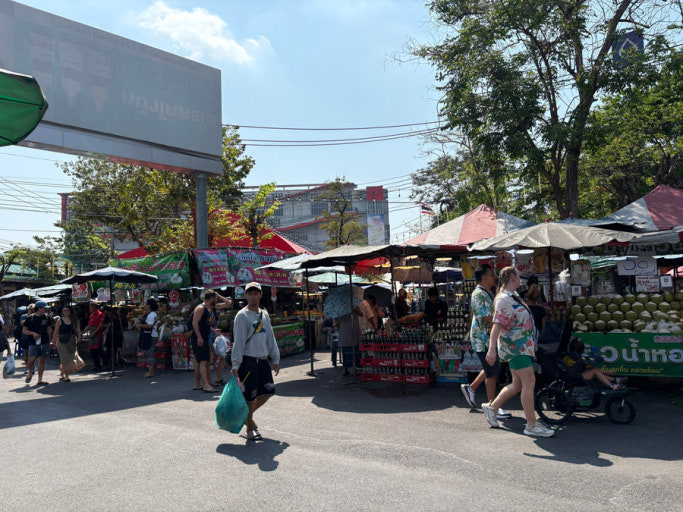
Chatuchak Weekend Market
Shopping DistrictOne of the world's largest weekend markets, with over 8,000 stalls selling clothing, antiques, home goods, art, and street food across a maze of covered lanes.
🚇 BTS Sukhumvit Line · Mo ChitOpen Saturdays and Sundays only (some sections also trade on Fridays); most stalls are closed on weekdays.
View on map ↗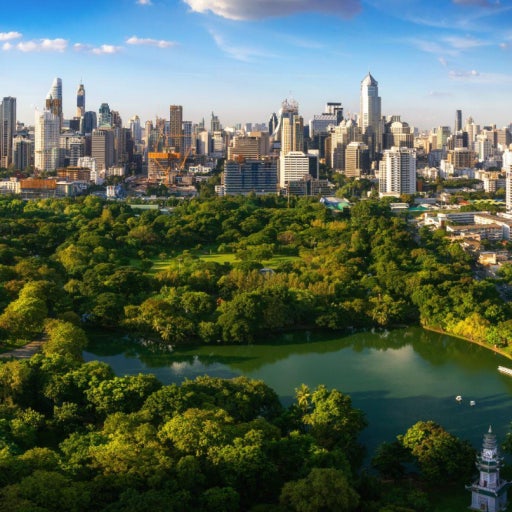
Lumphini Park
ParkCentral Bangkok's largest green space, popular for jogging, paddleboat rentals on its lake, and famous for the wild Asian water monitors that live in its waterways.
🚇 MRT Blue Line · LumphiniClosed: None — open every day
View on map ↗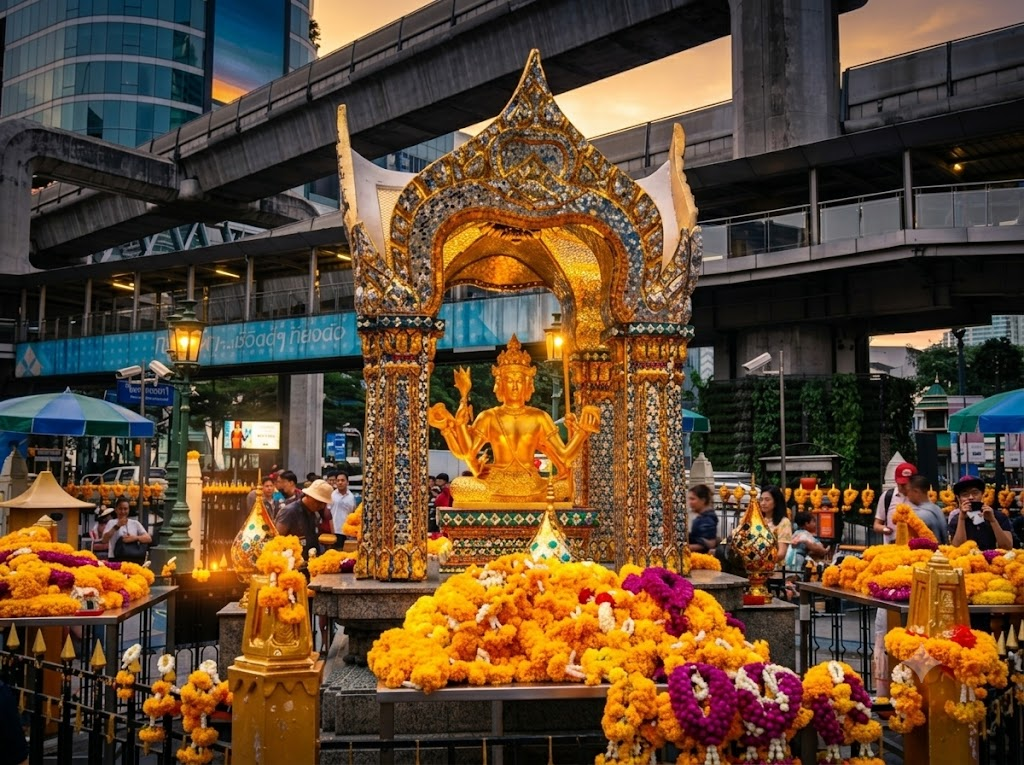
Erawan Shrine
Temple / ShrineA Hindu shrine to the four-faced Brahma tucked at a busy downtown intersection, where devotees hire resident dancers to perform traditional Thai dance as an offering.
🚇 BTS Sukhumvit Line · Chit LomClosed: None — open every day
View on map ↗